Balloon Color Trend Report: What's Selling in 2026
2026 balloon color trends for event professionals and retailers. Trending palettes, finish preferences, seasonal shifts, and what's replacing last year's favorites.
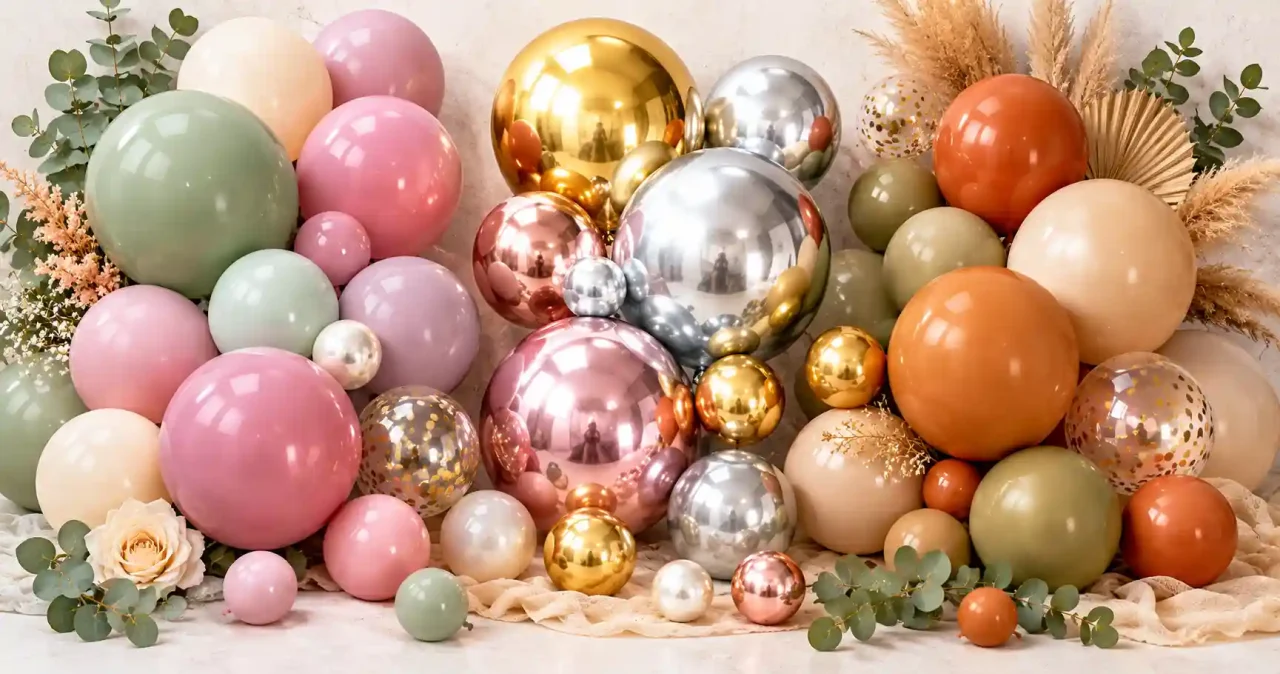
The balloon color landscape in 2026 has shifted decisively toward warm, natural tones and matte finishes, with earthy greens, terracotta, dusty pastels, and rich jewel tones replacing the bright chromes and candy pastels that defined the previous two years.
Color trends in the balloon industry do not happen in isolation. In addition, they follow the broader currents of interior design, fashion, wedding planning, and social media aesthetics. Additionally, when home decor magazines started featuring terracotta and sage in 2024, balloon manufacturers took notice. Notably, when Instagram wedding accounts pivoted to warm, organic palettes, retailers who had already stocked those colors had a head start. Beyond that, the decorators and retailers who stay ahead of these shifts sell more product and attract higher-end clients.
At a Glance
- Topic
- 2026 Balloon Color Trends and Forecast
- Also Known As
- Annual Color Report, Balloon Fashion Forecast, Color Trend Analysis
- Category
- Industry Trends / Product Knowledge
- Audience
- Event Professionals, Balloon Decorators, Retailers, Party Supply Buyers
- Key Concepts
- Trending palettes, finish preferences, seasonal color shifts, inventory planning, brand colors
Top Color Trends for 2026
Five color families are driving balloon sales in 2026, each reflecting a broader shift toward warmth, nature, and sophistication in event design.
1. Warm Neutrals
Terracotta, sand, taupe, and warm beige have moved from niche wedding colors to mainstream demand. For example, these tones work as both primary colors and neutral foundations, replacing the cool grays and silvers that previously served that role. Terracotta in particular has become one of the most-requested colors across all event types.
2. Earthy Greens
Sage green is the undisputed color of the moment, and 2026 sees it joined by eucalyptus, olive, and moss green. In practice, these greens pair with nearly every other trending color family -- warm neutrals, dusty pastels, and jewel tones all work with an earthy green anchor. Typically, the demand is driven by the broader "organic" and "botanical" event design trend.
3. Dusty Pastels
The pastel trend has matured. Candy-bright pastels (baby pink, baby blue, mint green) have given way to their dusty, muted counterparts: dusty rose, dusty blue, mauve, and slate. Importantly, these colors carry the softness of pastels without the juvenile association. Meanwhile, they photograph beautifully in natural light and pair well with metallic accents.
4. Rich Jewel Tones
Emerald, sapphire, deep amethyst, and ruby are commanding attention for formal events, fall and winter celebrations, and any occasion that calls for drama and depth. Jewel tones in matte finish are particularly striking and have become the go-to palette for upscale installations.
5. Warm Metallics
Brushed gold, antique copper, and warm bronze are replacing cool silver and bright rose gold as the metallic accents of choice. Of course, these warmer metallics harmonize with the earthy color direction and add sophistication without the cold, industrial feel that cool metallics can project.
Trending Palettes by Event Type
Each event type has its own trending color combinations, though the broader themes of warmth and natural tones show up across all categories.
Weddings
- Garden Romantic: Sage green + dusty rose + cream + brushed gold
- Desert Warm: Terracotta + sand + burgundy + antique copper
- Modern Minimal: White + taupe + black + chrome gold accents
- Jewel Luxe: Emerald + burgundy + gold + ivory
Baby Showers and Gender Reveals
- Gender-neutral: Sage + cream + tan + white (replacing the traditional blue/pink binary)
- Soft girl: Dusty rose + mauve + champagne + blush
- Soft boy: Dusty blue + slate + white + silver
- Boho baby: Terracotta + sage + mustard + cream
Adult Birthdays
- Milestone glam: Black + gold + white (still dominant for 30th, 40th, 50th)
- Modern luxe: Dusty blue + champagne + chrome silver
- Warm celebration: Terracotta + burnt orange + gold + cream
Corporate Events
- Professional polish: Brand colors + matte white + chrome gold accents
- Sophisticated gala: Matte black + chrome gold + emerald green
- Fresh and approachable: Sage + white + sand + subtle gold
Finish Preferences: Chrome, Matte, Pearl, Reflex
Balloon finish (the surface texture and sheen) has become as important as color in 2026, with matte finishes leading demand for the first time, followed by chrome as an accent, and pearl finishes declining.
Matte (Dominant)
Matte-finish balloons have a soft, velvety appearance with no shine or reflection. Ultimately, they photograph without glare, create an organic and tactile quality in installations, and pair naturally with the earthy color palette that defines 2026. Sempertex's Pastel and Fashion lines and Qualatex's standard latex both offer strong matte options. Matte is the default choice for organic garlands, arches, and wall installations.
Chrome (Accent)
Chrome balloons (high-gloss metallic finish) remain popular but have shifted from the dominant finish to a supporting role. In 2026 installations, chrome balloons appear as accents -- a few chrome golds scattered through a matte garland, chrome columns flanking a matte arch, or a single chrome balloon topping a matte bouquet. In fact, the contrast between matte and chrome in the same installation creates visual depth.
Pearl (Declining)
Standard pearl-finish balloons (the classic shiny latex look) have declined as decorators and customers increasingly choose either matte for organic designs or chrome for metallic impact. Pearl remains functional for basic party decorating and retail balloon sales but is no longer the default choice for designed installations.
Reflex (Specialty)
Reflex balloons (mirror-like metallic finish, brighter than chrome) occupy a specialty niche for high-impact accent pieces. Notably, they are most commonly used in silver, gold, and rose gold for statement pieces, backdrops, and ceiling installations where maximum light reflection is desired. Sempertex Reflex is the industry standard in this category.
Seasonal Color Shifts
While the overarching color direction stays consistent through 2026, specific color emphasis shifts with the seasons, driven by event types and environmental context.
Spring (March-May)
Sage green and dusty pastels dominate spring events. Wedding season drives demand for romantic, natural palettes. Graduation adds school-color demand on top of trend colors. For instance, the spring palette is light, warm, and optimistic: sage, dusty rose, cream, champagne, soft yellow.
Summer (June-August)
Warmer, more saturated colors take over as outdoor events increase. Terracotta, burnt orange, mustard, and coral complement sun-drenched venues. Tropical palettes (teal, coral, gold) emerge for destination and outdoor celebrations. White remains high-demand as a universal pairing color for summer displays.
Fall (September-November)
Jewel tones and deep warm colors reach peak demand. Emerald, burgundy, burnt orange, and deep gold define the fall palette. Matte finishes in these tones create dramatic, moody installations that suit the season. Halloween drives demand for matte black, deep purple, and burnt orange.
Winter (December-February)
Metallic demand peaks for holiday and New Year's events. Chrome gold, chrome silver, and matte white combinations dominate December. January shifts to Valentine's colors, where dusty rose and mauve have joined traditional red. Deep jewel tones (emerald, sapphire, amethyst) work for formal winter galas and corporate events.
Colors Fading Out
Understanding what is declining is as important as knowing what is trending -- it prevents overstock of slow-moving colors and keeps your inventory aligned with current demand.
Rose Gold (Declining)
The bright, pink-toned rose gold that defined the 2019-2023 era has faded significantly. That said, it is being replaced by warmer copper and antique gold tones that feel less "trendy millennial" and more "timeless warmth." Rose gold is not gone entirely -- it still sells for certain birthday and bridal events -- but it is no longer the go-to metallic accent.
Candy Pastels (Declining)
Bright, saturated pastels (hot pink, electric mint, vivid lavender) are giving way to their dusty counterparts. In addition, the shift is subtle -- it is not that pink is out, it is that the specific shade of pink has moved from candy-bright to dusty and muted. Retailers who still stock heavily in bright pastels may notice slower sell-through in 2026.
Neon Colors (Specialty Only)
Neon green, neon pink, and neon orange have moved from occasional trend use to specialty-only demand. Additionally, they still sell for specific themed parties (80s/90s nostalgia, glow parties, club events) but have exited the mainstream palette for standard event decoration.
Standard Pearl Finish
As noted in the finish section, standard pearl-finish balloons are losing share to matte and chrome. Notably, this does not mean they do not sell -- they remain a staple for basic party needs -- but decorated, designed installations increasingly bypass pearl in favor of more distinctive finishes.
Emerging Combinations
The most interesting trend development is not individual colors but the specific combinations that decorators and event planners are requesting -- pairings that did not exist in the market even two years ago.
Terracotta + Sage
The combination of the year. Warm earth meets cool green in a pairing that reads as natural, sophisticated, and versatile. Beyond that, add cream and gold accents and you have a palette that works for weddings, baby showers, corporate events, and everything in between.
Dusty Blue + Sand
A softer alternative to the classic navy + gold. For example, this combination feels coastal without being themed, modern without being cold. In practice, it is particularly strong for spring and summer weddings and upscale baby showers.
Matte Black + Emerald + Chrome Gold
The formal event power combination. Dramatic, luxurious, and impossible to ignore. Typically, this palette works for galas, awards ceremonies, corporate holiday parties, and milestone birthday celebrations where the host wants something bold.
Mauve + Olive + Cream
A European-influenced palette that reads as artistic and refined. Importantly, this combination has grown through the bridal market and is expanding into baby showers and boutique retail displays. Meanwhile, the muted tones create a cohesive, calming visual that photographs exceptionally well.
Burnt Orange + Burgundy + Gold
The autumn powerhouse. Of course, this warm, rich combination dominates fall events and has started crossing into year-round use for clients who want depth and drama without going dark. Ultimately, it pairs naturally with dried floral elements and wooden accents.
How Trends Affect Inventory Planning
Color trends should inform your inventory decisions but never dictate them -- the smart approach is maintaining a strong core color base while strategically adding trending colors based on your market's demand signals.
The 70/20/10 Inventory Rule
- 70% Core Colors: White, black, red, blue, pink, gold, silver, green, purple, yellow. In fact, these sell year-round regardless of trends. Never under-stock them.
- 20% Trending Colors: Sage, terracotta, dusty rose, dusty blue, emerald, and other current-year trend colors. Stock based on seasonal demand and local market preferences.
- 10% Experimental/New: Newly released colors, untested combinations, or emerging trends you want to gauge demand for. As well, keep quantities low until you have sell-through data.
Reading Demand Signals
Pay attention to what event planners and decorators in your market are asking for. For instance, if three decorators ask for terracotta in one week, stock up before they find another supplier. Monitor wedding industry publications, Pinterest trending boards, and Instagram event hashtags for early signals. That said, the trends covered in this report were visible in designer installations 6-12 months before they hit mainstream retail demand.
Brand Diversification
No single balloon manufacturer covers every trending color. Stock from multiple brands to ensure color coverage: Sempertex for fashion-forward shades and Reflex metallics, Qualatex for professional-grade consistency, Funsational for competitive core coverage, and Prima for unique fashion colors.
Brand-Specific New Colors
Major balloon manufacturers release new colors annually, and the 2026 releases reflect the broader industry shift toward earthy, muted, and sophisticated shades.
Sempertex
Sempertex continues to lead in color innovation with expanded Fashion and Deluxe lines. Additionally, their matte earth tones (Fashion Caramel, Fashion Eucalyptus, Deluxe Cappuccino) have been strong sellers. Notably, the Reflex line in gold and rose gold remains the industry standard for mirror-finish metallics.
Qualatex
Qualatex maintains the broadest professional color range with reliable color consistency across production runs. Beyond that, their Chrome line continues to evolve, and their standard colors provide the benchmark that decorators rely on for predictable results.
Funsational
Funsational offers strong value across core colors and has expanded into trending shades at competitive price points. For example, for retailers and decorators who need volume in trending colors without premium pricing, Funsational provides an excellent balance of quality and cost.
Prima
Prima brings unique fashion-forward shades to the market, often offering colors that do not have direct equivalents in other lines. In practice, their specialty colors appeal to decorators looking for distinctive tones that set their work apart.
Shop This Year's Trending Balloon Colors
Bulk balloons and accessories for projects like this one.
Frequently Asked Questions
Key Takeaways
- Warm neutrals and earthy greens are the dominant color direction for 2026 -- terracotta, sage, and sand lead demand
- Matte finishes have overtaken chrome as the default, with chrome shifting to a 10-20% accent role
- Dusty pastels have replaced candy pastels -- the same color families in more muted, sophisticated tones
- Rose gold is declining -- warm copper and antique gold are the new metallic accent colors
- Use the 70/20/10 inventory rule: 70% core colors, 20% trending colors, 10% experimental
- Stock trending colors from multiple brands: Sempertex, Qualatex, Prima, and Funsational