Helium Safety Best Practices for Event Professionals
Helium safety guidelines for balloon professionals. Cylinder handling, ventilation requirements, transport regulations, and emergency procedures.
Helium is non-toxic and non-flammable, which makes people treat it casually. In addition, that casualness is the actual safety risk. Additionally, a cylinder at 2,000 PSI deserves respect regardless of what gas is inside it.
This guide covers the safety practices every balloon professional needs to know, from basic cylinder handling to DOT transport regulations. Whether you are inflating 50 balloons for a birthday party or 500 for a corporate gala, the fundamentals do not change: store it upright, ventilate the space, use proper equipment, and never let anyone inhale directly from the cylinder.
At a Glance
- Topic
- Helium Gas Safety for Balloon Professionals
- Also Known As
- Compressed Gas Safety, Cylinder Handling, Helium Hazard Management
- Category
- Safety / Compliance
- Audience
- Balloon Business Owners, Event Decorators, Helium Handlers, Event Venue Staff
- Key Concepts
- Cylinder handling, ventilation, transport regulations, OSHA compliance, emergency procedures, training
Understanding Helium Gas Properties
Helium is the second-lightest element in the universe, an inert noble gas that does not burn, does not react with other chemicals, and poses no toxicity risk in normal concentrations.
Those properties make it ideal for balloon inflation. For example, they also make it easy to underestimate the real hazards, which are not chemical but physical.
Key Properties
- Non-flammable: Helium will not burn or support combustion under any circumstances. In practice, it is safe to use near heat sources, candles, and cooking equipment, unlike hydrogen.
- Non-toxic: Breathing small amounts of helium (as happens naturally during balloon inflation) is not harmful. Typically, the danger is breathing pure helium in place of oxygen.
- Lighter than air: Helium rises and disperses quickly in ventilated spaces. In enclosed spaces, it accumulates near the ceiling and displaces oxygen downward.
- Odorless and colorless: You cannot see or smell a helium leak. Importantly, the only indication is the sound of escaping gas or an unexplained drop in tank pressure.
- Asphyxiant: In sufficient concentration, helium displaces oxygen. Oxygen levels below 19.5% cause impaired judgment. Below 16%, loss of consciousness. Below 6%, death within minutes.
Cylinder Storage and Handling
Most helium-related incidents involve cylinders falling, being dropped, or having their valves damaged. Proper storage and handling prevent the vast majority of accidents.
Storage Requirements
- Always upright: Cylinders must be stored in an upright (vertical) position. In addition, never lay a cylinder on its side.
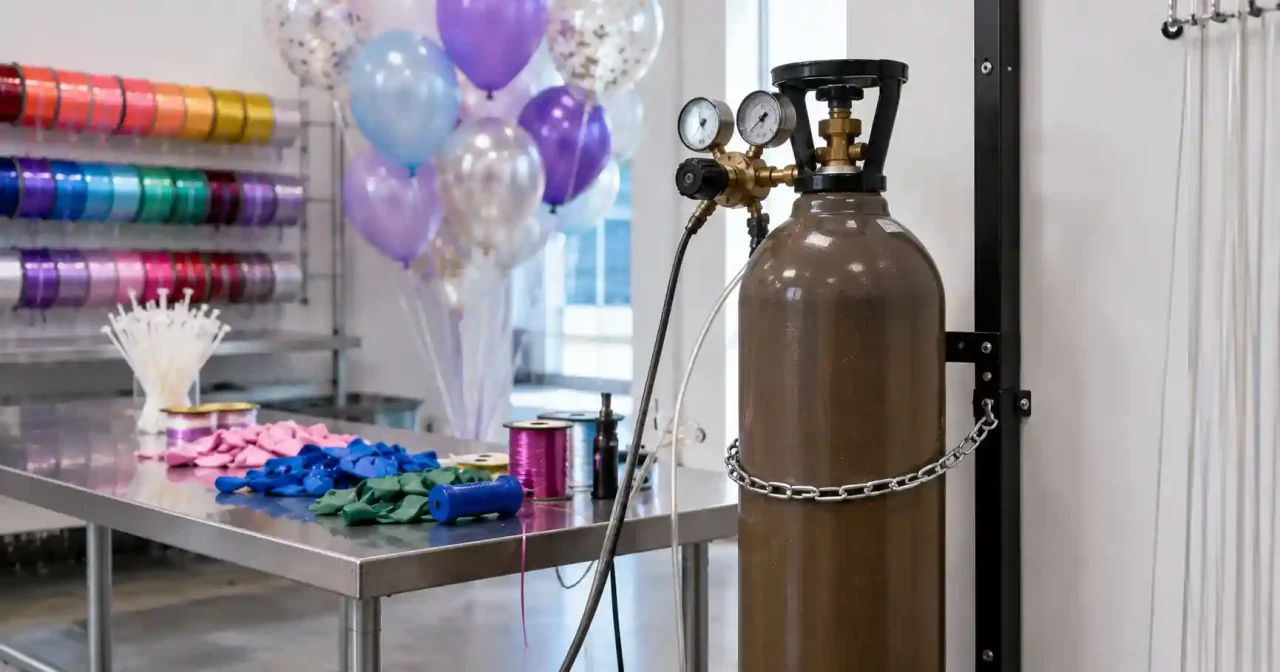
- Secured at all times: Chain, strap, or cage cylinders to a wall, rack, or cart. Ultimately, an unsecured cylinder that falls can become a projectile if the valve breaks.
- Valve caps on: When the cylinder is not actively connected to a regulator, the valve protection cap must be in place. In fact, this cap prevents valve damage if the cylinder is bumped or tipped.
- Ventilated area: Store in a well-ventilated space. Notably, never in a closet, sealed room, or vehicle trunk.
- Away from heat: Keep cylinders away from radiators, furnaces, direct sunlight, and any heat source. Storage temperature should not exceed 125 degrees Fahrenheit (52 degrees Celsius).
- Separate full and empty: Store full cylinders away from empties and mark each clearly. For instance, this prevents confusion during busy event setups.
Handling Best Practices
- Never drag, slide, or roll cylinders. That said, use a proper cylinder cart or hand truck.
- Never lift a cylinder by the valve or valve cap. In addition, use the body of the cylinder.
- When moving a cylinder, keep the valve cap in place and the cylinder upright.
- Never drop a cylinder or let it strike another cylinder or hard surface.
- Inspect cylinders for dents, corrosion, or damage before each use. Importantly, do not use a visibly damaged cylinder.
Transport Regulations
Transporting helium cylinders falls under Department of Transportation (DOT) regulations, and the requirements vary based on cylinder size and whether you are using a personal or commercial vehicle.
Personal Vehicle Transport
Small cylinders (typically under 1,000 pounds gross weight of compressed gas) can be transported in a personal vehicle with these precautions:
- Never transport in the passenger compartment. Additionally, use the trunk (sedan), cargo area (SUV/van), or truck bed.
- Secure the cylinder upright so it cannot tip or roll.
- Ensure ventilation. Notably, a sealed trunk with a leaking valve can displace oxygen. Crack a window or use a ventilated cargo area.
- Keep the valve cap on during transport.
- Do not leave cylinders in a hot vehicle. Internal pressure increases with temperature.
Commercial Transport
Businesses transporting helium cylinders in commercial vehicles may need to comply with DOT Hazardous Materials Regulations (49 CFR Parts 171-180), depending on the quantity and cylinder size. Requirements may include:
- Hazmat placarding on the vehicle
- Shipping papers and Safety Data Sheets (SDS) in the vehicle
- Driver training in hazmat handling
- Proper cylinder securement per DOT standards
Consult DOT regulations or your helium supplier for specific requirements based on the quantities you transport.
Ventilation Requirements
Adequate ventilation during balloon inflation is not about comfort. Beyond that, it is about maintaining oxygen levels in the workspace.
Normal atmospheric oxygen is approximately 20.9%. OSHA defines an oxygen-deficient atmosphere as anything below 19.5%. Inflating balloons in a well-ventilated room or outdoors keeps oxygen levels well above this threshold. Inflating 200 balloons in a sealed 10x10 room is a different situation entirely.
Ventilation Guidelines
- Small quantities (under 50 balloons): A standard room with a door or window is sufficient.
- Medium quantities (50-200 balloons): Open at least two sources of ventilation (windows, doors) and ensure cross-airflow.
- Large quantities (200+ balloons): Use a large, well-ventilated space. Mechanical ventilation (fans, HVAC) is recommended. For example, consider inflating in stages with breaks between sessions.
- Event venues: When inflating on-site at a venue, identify the ventilation capabilities of the specific room you will be working in before beginning inflation.
Inflation Safety Procedures
Safe inflation starts with the right equipment and ends with consistent technique. Shortcuts during inflation are where most minor injuries occur.
Equipment Setup
- Secure the cylinder upright using a cart, strap, or by chaining to a stable structure.
- Inspect the valve and regulator connection for damage or debris.
- Attach the regulator to the cylinder valve. Hand-tighten, then use a wrench to snug (do not over-tighten).
- Open the cylinder valve slowly (one-quarter turn at a time) and check for leaks. Typically, a soapy water solution applied to connections will bubble if gas is escaping.
- Adjust the regulator to the appropriate flow rate for your balloon size.
During Inflation
- Never leave a cylinder unattended with the valve open.
- Do not over-inflate balloons. Over-inflation weakens the latex and increases the risk of popping, which can startle nearby workers and guests.
- Use a balloon sizer to ensure consistent inflation. Consistent sizing also conserves helium.
- Keep the cylinder away from foot traffic to prevent accidental tipping.
- When finished, close the cylinder valve completely, bleed remaining pressure from the regulator, and replace the valve cap.
Emergency Procedures
Helium emergencies are rare, but having a clear response plan means the difference between a controlled situation and a dangerous one.
Gas Leak
- If you can safely reach the cylinder valve, close it to stop the leak.
- Ventilate the area immediately by opening doors and windows.
- Move all personnel away from the leak area.
- Do not use the cylinder again until the leak is identified and repaired.
- Contact your helium supplier for guidance on the leaking cylinder.
Cylinder Damage or Valve Failure
- Evacuate the immediate area.
- Do not attempt to repair or stop a high-pressure gas release from a damaged valve.
- Call emergency services (911) if the cylinder is venting uncontrollably or has become a projectile.
- Block access to the area until the cylinder is fully depressurized.
Oxygen Displacement / Exposure
- Move the affected person to fresh air immediately.
- If the person is unconscious or not breathing, call 911 and begin CPR if trained.
- Do not re-enter the oxygen-depleted area without proper ventilation.
- Seek medical attention even if symptoms resolve, as oxygen deprivation can have delayed effects.
Helium Inhalation Injury
- If someone has inhaled helium directly from a pressurized source, call 911 immediately.
- Move the person to fresh air.
- Monitor for signs of lung injury: difficulty breathing, chest pain, coughing, or blue-tinged lips/fingers.
- Even if the person feels fine initially, seek medical evaluation. Lung barotrauma may not present symptoms immediately.
OSHA and DOT Compliance
Balloon businesses that employ staff or transport helium commercially are subject to federal safety regulations, and compliance is both a legal requirement and a smart business practice.
OSHA Requirements
- Hazard Communication (29 CFR 1910.1200): Maintain Safety Data Sheets (SDS) for helium on-site and ensure all employees have access to them.
- Compressed Gas Standards (29 CFR 1910.101): Follow Compressed Gas Association (CGA) guidelines for cylinder storage, handling, and use.
- General Duty Clause: Employers must provide a workplace free from recognized hazards. Importantly, this includes proper ventilation, equipment maintenance, and employee training.
- Training documentation: Document all safety training and make records available for OSHA inspection.
DOT Requirements
- Cylinder inspection: DOT-rated cylinders must be hydrostatically tested every 5 or 10 years (depending on cylinder type) by an authorized testing facility.
- Transport compliance: Follow 49 CFR Parts 171-180 for transporting compressed gas cylinders in commercial vehicles.
- Labeling: Cylinders must display the proper DOT hazard class label (Non-Flammable Gas, Class 2.2).
Insurance Considerations
Your business liability insurance should specifically cover compressed gas handling if helium is part of your operations, and many policies do not include it by default.
Review your general liability policy with your insurance agent and confirm coverage for:
- Compressed gas cylinder storage and use
- Transport of compressed gas (if applicable)
- On-site helium inflation at client venues
- Employee injury related to cylinder handling
- Third-party injury from balloon or cylinder-related incidents
Document your safety procedures, training records, and equipment maintenance logs. Insurance claims related to compressed gas incidents are significantly easier to resolve when you can demonstrate a documented safety program.
Training Your Team
Every person who handles a helium cylinder in your business needs to know how to do it safely, regardless of whether they are a full-time employee, a part-time helper, or a subcontractor working your event.
Training Checklist
- Helium gas properties and hazards
- Cylinder inspection procedures
- Proper storage and securement
- Regulator connection and disconnection
- Safe inflation techniques
- Ventilation awareness
- Transport requirements (if the employee transports cylinders)
- Emergency procedures for leaks, falls, and exposure
- Location of Safety Data Sheets
- The absolute prohibition on inhaling helium from any pressurized source
Training Schedule
Conduct initial training before any employee handles helium equipment. For example, provide refresher training annually and whenever procedures change. Document each training session with the date, topics covered, and attendee signatures. Meanwhile, keep records for at least three years.
Shop Helium Equipment & Safety Supplies
Bulk balloons and accessories for projects like this one.
Frequently Asked Questions
Key Takeaways
- Never inhale helium from a pressurized source; it can cause fatal lung injury
- Store cylinders upright, secured, ventilated, and capped at all times when not in use
- Ensure adequate ventilation during inflation, especially for large-quantity sessions
- Transport cylinders upright, secured, and never in the passenger compartment
- Train every team member who handles helium and document the training
- Maintain OSHA and DOT compliance with Safety Data Sheets, training records, and proper equipment
- Use professional-grade regulators and safety equipment from a trusted supplier