How Many Balloons for an Arch?
A size-by-size reference guide with exact counts by arch length and balloon size.
For a standard 10-foot organic balloon arch using 11-inch balloons, you need approximately 80–100 balloons. That number moves based on three things: the arch’s total length, the balloon size you’re using, and whether you’re building an organic or structured arch. This page covers every common arch size with a reference table — and our free balloon calculator handles custom dimensions when the table doesn’t cover yours.
What Affects Balloon Count in an Arch?
Arch Length
This is the single biggest variable. Balloon count scales roughly linearly with arch length — double the arch, double the balloons. A 20-foot arch needs about twice what a 10-foot arch does. The key mistake people make is eyeballing the length instead of measuring. A few feet of difference can mean 30–50 extra balloons, which means money and time you weren’t planning on. Measure carefully before you order.
Balloon Size
Smaller balloons pack tighter and require more per foot of arch. A 5-inch balloon arch uses roughly 2–3 times as many balloons as the same arch built with 11-inch balloons. That sounds like more work (and it is), but 5-inch arches produce an incredibly dense, textured look that photographs beautifully.
On the other end, 16-inch balloons cover more surface area per balloon, so you need fewer of them. The tradeoff is a bolder, less detailed aesthetic. Most professional decorators land on 11-inch as the standard — it’s the sweet spot between visual impact, manageable counts, and cost per balloon. Our 11-inch balloon arch guide covers exact counts for every length.
Build Style: Organic vs. Structured
This is where balloon counts diverge dramatically for the same arch length.
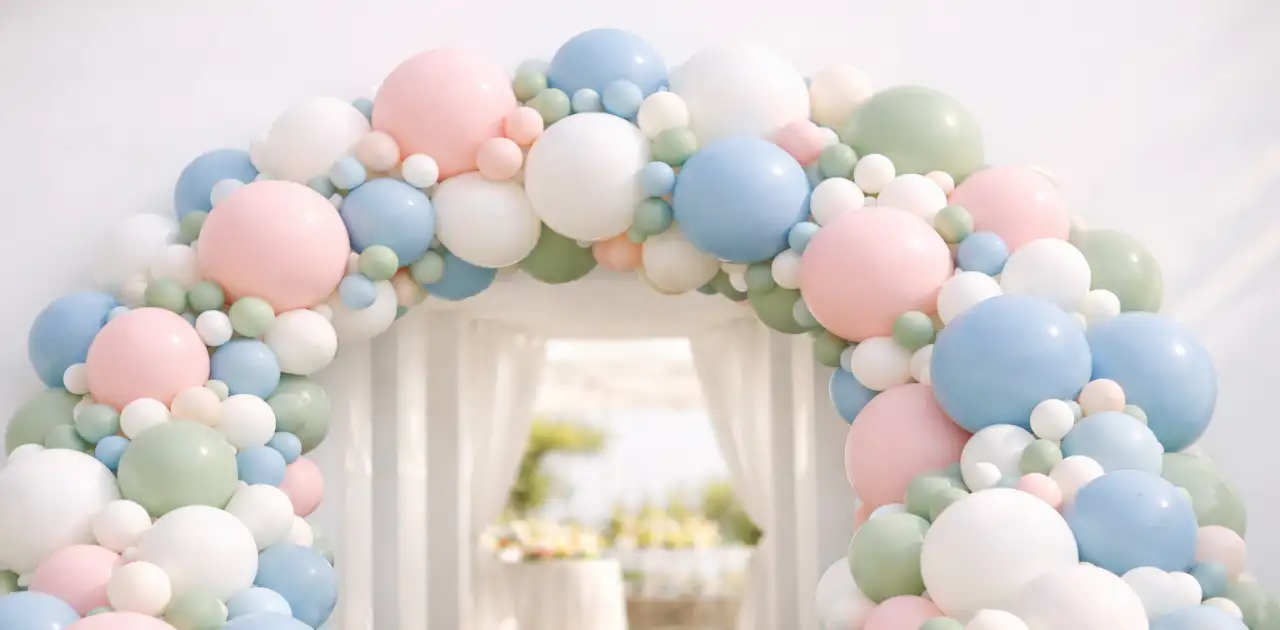
Organic arches are the trendy, asymmetrical style you see on Instagram — mixed balloon sizes, intentional gaps, clusters that look natural. They require 20–30% more balloons than structured arches because the layering, clustering, and varied inflation levels all consume extra material. They’re more forgiving to build (imperfection is the point), but the balloon budget is higher. If the organic look appeals to you, also check our balloon garland counts guide for a simpler alternative.
Structured arches use a rigid frame (PVC or metal) with uniformly inflated balloons placed in a precise grid pattern. Cleaner geometry, more predictable count, and fewer balloons overall. They look polished and formal — think grand openings, car dealership events, and corporate stages.
Neither is “better.” They’re different tools for different events. For a deeper comparison, see balloon arch vs. balloon garland. If you’re deciding between the two, think about the vibe you want first and the balloon count second.
Balloon Count Reference Table
This table covers the most common arch lengths across all three standard balloon sizes. The ranges reflect organic (higher end) vs. structured (lower end) builds.
| Arch Length | 5" Balloons | 11" Balloons | 16" Balloons |
|---|---|---|---|
| 4 feet | 40–50 | 25–35 | 12–16 |
| 6 feet | 60–75 | 40–50 | 18–24 |
| 8 feet | 80–100 | 55–70 | 24–32 |
| 10 feet | 100–125 | 80–100 | 30–40 |
| 12 feet | 120–150 | 95–120 | 36–48 |
| 15 feet | 150–185 | 115–145 | 45–58 |
| 20 feet | 200–250 | 155–195 | 60–80 |
Ranges account for organic vs. structured build styles. Add 10–15% to any estimate for breakage and inflation variation.
Common Event Arch Sizes
Not sure what arch length you need? Here are the most common setups matched to real events:
| Event / Location | Typical Arch Span | 11" Balloon Count |
|---|---|---|
| Standard doorway (3 ft wide) | 4–5 feet | 25–45 |
| Double door entrance | 6–8 feet | 40–70 |
| Photo backdrop / dessert table | 8–10 feet | 55–100 |
| Stage or ceremony backdrop | 12–15 feet | 95–145 |
| Grand entrance / outdoor event | 15–20 feet | 115–195 |
| Sports tunnel (walk-through) | 20+ feet | 200+ |
These assume a standard arch shape. If you’re building a half arch (one side anchored, the other floating), cut the count roughly in half.
How to Measure Your Arch Length
Measure the span from base to base — not the curve. A 10-foot span produces an arch with roughly 12–14 feet of actual curve length, and the reference table above already accounts for that. Measuring the curve instead of the span is the most common mistake, and it leads to over-ordering.
Arch height matters too. A 10-foot span with a tall 5-foot peak uses more balloons than the same span with a low 2-foot peak — the taller arch has more curve length to cover. If your arch has a dramatic peak, add 10–15% to the table values.
For doorframe arches, measure the width of the opening and add your desired overhang on each side. A standard 3-foot doorway with 6 inches of overhang per side gives you a 4-foot span. If you’re working with an 8-foot ceiling, keep the arch peak at 6.5–7 feet (see our balloon arch for 8-foot ceilings guide) to avoid compression against the ceiling tiles.
Pro Tips: Getting the Most from Your Balloons
- Buy from the same brand and batch. Mixing brands means inconsistent sizes when inflated to the same pressure. Qualatex, Sempertex, and Funsational all inflate slightly differently.
- Use a balloon sizer. A simple cardboard template ensures every balloon is inflated to the same diameter. Consistency is what makes an arch look professional vs. homemade.
- Inflate at the venue. Temperature changes between your car and the event space will expand or shrink balloons. Inflate where the arch will live.
- Work in clusters of 4. Tie two pairs together, then twist the pairs into a quad cluster. Attach clusters to your frame or strip. This is faster and more stable than individual balloon placement.
- Air-filled arches last longer. If your arch doesn’t need to float, skip the helium entirely. Air-filled arches on a frame last 2–5 days vs. 8–12 hours for helium.
Need an Exact Count?
For any arch length not listed above, the HICO balloon calculator gives you an exact count based on your dimensions and balloon size.
Use the Free Balloon Calculator