Balloon Arch vs. Balloon Garland: What’s the Difference?
They look alike in photos. They’re built differently, priced differently, and suited to completely different events.
Scroll through any event planning feed and you’ll see balloon arches and balloon garlands used almost interchangeably. Vendors blur the line. Pinterest doesn’t help. And by the time you’re shopping for supplies, you’re not sure which one you actually need.
They’re not the same thing. A balloon arch is a full, symmetrical structure built on a rigid frame. A balloon garland is a flexible, organic arrangement attached to a surface or hanging line. They differ in frame requirements, balloon count, setup complexity, cost, and where they work best.
This page breaks down each difference so you can pick the right display for your event — and not overbuy or underbuild.
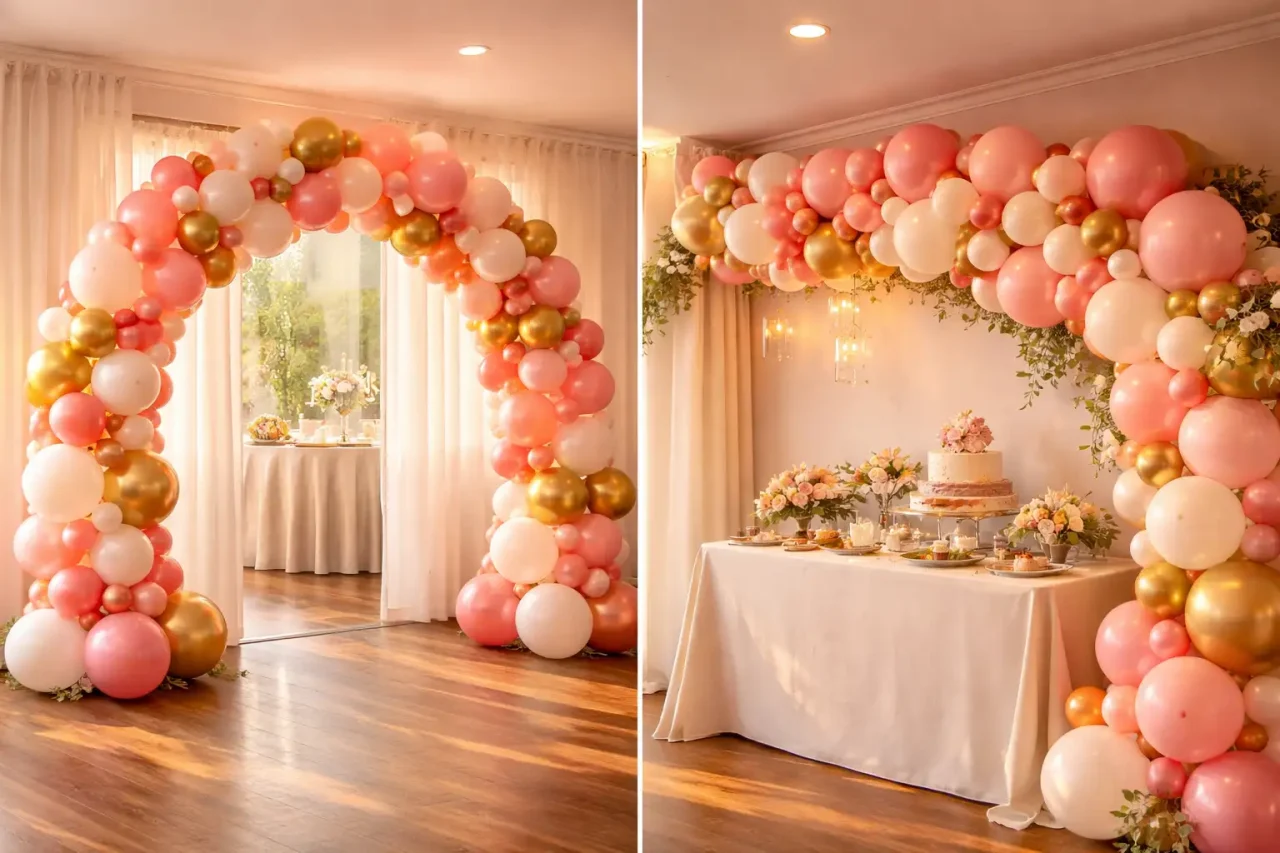
Structure Comparison
The core difference is the skeleton. An arch has one. A garland doesn’t — or at least not in the traditional sense.
A balloon arch uses a rigid frame — typically PVC pipe, metal conduit, or a commercial arch kit. Balloons are attached in uniform clusters (usually 4 per tier) around the frame, creating a full, rounded tunnel or doorway shape. The frame is what makes it freestanding.
A balloon garland uses a flexible decorating strip (a long plastic strip with pre-punched holes) or fishing line. Balloons are threaded or tied along the strip in an organic, staggered pattern. The strip is then attached to a wall, ceiling, table edge, or backdrop using hooks, nails, or command strips.
| Feature | Balloon Arch | Balloon Garland |
|---|---|---|
| Frame required | Yes — rigid (PVC, metal, or arch kit) | No — uses flexible strip or line |
| Shape | Symmetrical curve or spiral | Organic, free-form, cascading |
| Freestanding | Yes (with weighted base plates) | No — needs wall, ceiling, or backdrop |
| Setup complexity | Higher — frame assembly + uniform clusters | Lower — thread and attach |
| Balloon coverage | Full 360° around the frame | Front-facing only (one side) |
| Typical use | Entrances, walkways, stage framing | Backdrops, walls, table runners |
The structural distinction matters most for freestanding displays. If you need a display that stands on its own in the middle of a room or outdoors without a wall behind it, you need an arch. (For freestanding vertical displays, see our balloon column calculator.) If you have a surface to attach to, a garland gives you more creative freedom with less hardware.
Balloon Count Comparison
Here’s where people get tripped up. An arch and a garland that cover the same visual footprint use very different balloon counts — and for good reason.
A balloon arch covers 360 degrees around the frame. Every tier needs full coverage, typically 4 balloons per cluster. A standard 8-foot arch uses 10–12 tiers per side, meaning 80–96 balloons minimum for a clean, professional look. (For exact counts by length, see how many balloons for an arch.) Go spiral and the count climbs higher.
A balloon garland is front-facing only. You’re decorating one side. A garland covering the same 8-foot span might use 60–80 balloons (our balloons per foot for garlands guide has the full breakdown) — but here’s the key difference: garlands benefit from varied inflation. You intentionally mix 5-inch, 11-inch, and 16-inch balloons at different inflation levels. That variation creates the organic, flowing look garlands are known for.
Arches demand uniform inflation. Every balloon in a tier cluster needs to be the same size, or the arch looks uneven. This means you need a sizing template or sizing box and more discipline during assembly.
For first-timers, garlands are more forgiving. An under-inflated balloon in a garland just looks like a design choice. An under-inflated balloon in an arch looks like a mistake.
Cost Comparison
Both displays use the same balloons. The cost difference comes from hardware, time, and reusability.
| Cost Factor | Balloon Arch | Balloon Garland |
|---|---|---|
| Frame/strip cost | $15–$60 (arch kit or PVC) | $3–$8 (decorating strip) |
| Balloon count (8 ft display) | 80–120 | 60–90 |
| Setup time | 60–90 minutes | 30–60 minutes |
| Extra supplies | Base plates, sandbags, or water weights | Command strips, hooks, or fishing line |
| Frame reusability | High — metal/PVC frames last years | Low — strips are single-use |
| Typical total cost (DIY) | $40–$100 | $20–$60 |
If you do events regularly, an arch frame pays for itself after 2–3 uses. If this is a one-time party, a garland is almost always cheaper and faster.
Which One for Which Event?
The right choice depends on the venue, the function of the display, and whether you have a wall to work with.
| Scenario | Best Choice | Why |
|---|---|---|
| Outdoor entrance | Arch | Needs to be freestanding; garland has nothing to attach to |
| Indoor photo backdrop | Garland | Wall-mounted, organic look photographs well |
| Doorframe decoration | Either | Both work — garland is faster, arch is fuller |
| Dessert table accent | Garland | Cascading garland drapes over the table edge beautifully |
| Stage backdrop | Garland | Covers wide spans; multiple garlands can layer for depth |
| Sports team tunnel | Arch | Must be freestanding and tall enough to run through |
| Photo wall / selfie station | Garland | Flat against the wall gives clean photo composition |
| Grand opening entrance | Arch | Professional, symmetrical, visible from a distance |
| Baby shower focal point | Garland | Organic style fits the aesthetic; easy color blending |
| Trade show booth | Arch | Freestanding, portable, draws foot traffic from aisles |
Can You Combine Both?
Yes. Hybrid builds are increasingly popular, and they solve the limitations of each style.
A garland arch uses a rigid frame for shape and stability, but the balloons are attached in an organic garland style rather than uniform clusters. You get the freestanding capability of an arch with the textured, flowing look of a garland.
This hybrid approach works well for:
- Wedding entrances — freestanding but with a soft, romantic aesthetic
- Corporate events — structured enough to look intentional, organic enough to avoid “kid’s party” territory
- Large-scale photo ops — the frame keeps it stable for hours while the garland style makes it camera-ready
The trade-off: hybrid builds take the most time. You’re assembling a frame and doing organic placement, so expect 90–120 minutes for an 8-foot display.
When Hybrids Don’t Work
Skip the hybrid if you need a walk-through tunnel. Organic garland placement can create uneven surfaces that snag on clothing or hair. Traditional uniform arch clusters keep a cleaner, rounder interior profile.
Also skip it for spiral arches. The spiral pattern requires precise, uniform balloon placement. Organic styling fights the spiral effect instead of enhancing it.
Pro Tips: Choosing Between an Arch and a Garland
- No wall? Go arch. (For indoor rooms with 8-foot ceilings, see our indoor arch guide.) Garlands need a mounting surface. No surface means no garland — unless you build a backdrop frame first, which adds cost and time.
- First-timer? Go garland. The organic style is forgiving. Arches demand uniform sizing on every single balloon.
- Outdoors with wind? Go arch with sandbag bases. Garlands attached to lightweight backdrops become sails in any breeze.
- Mix at least 3 balloon sizes in a garland. Use 5-inch, 11-inch, and 16-inch. The size variation is what creates that organic, professional look.
- Use a sizing box for arches. Cut a hole in a cardboard box to match your target diameter. Test every balloon. Consistency is everything.
- Inflate garland balloons the night before if they’re air-filled. Air-filled latex lasts days. Assemble the strip morning-of for the freshest look.
- Double-stuff balloons for a garland’s accent colors. Insert one balloon inside another before inflating for a richer, more saturated color. Saves you from buying specialty shades.
Once you’ve decided on your display type, the HICO balloon calculator gives you the exact balloon count for your dimensions.
Enter your arch span or garland length and get an instant, itemized count — including size breakdowns for organic garland builds.
Use the Free Balloon Calculator